Teros Properties Limited · Est. IT Practice
Software, cloud &
infrastructure for
serious operations.
We are an IT company that designs and operates the systems businesses rely on — from custom applications and cloud platforms to the cybersecurity and data plumbing behind them.
- Practice
- Software · Cloud · Security
- Method
- Incremental, evidence-led
- Contact
- robynpowel67@gmail.com
§ 01 — Introduction
A quiet, technical practice.
Teros Properties Limited works with organisations that treat their software and infrastructure as operational assets — not as marketing copy. Our engagements begin with a written understanding of the problem and end with systems that people actually use.
We prefer small, senior teams; explicit contracts of work; and production evidence over slideware. The result is technology that behaves predictably, is documented, and can be handed on.
§ 02 — Services
Six lines of work.
The core practice areas we deliver. Each is available as a standalone engagement or as part of a longer programme.
- 01
Custom software
Web, back-office, and internal platforms built for a specific operational fit.
- 02
Cloud infrastructure
Reliable environments across public and private cloud, with observability by default.
- 03
Cybersecurity
Assessment, hardening, and monitoring aligned to recognised control frameworks.
- 04
Data & integration
Connecting systems and preparing data so it can be trusted and acted upon.
- 05
Digital transformation
Modernising legacy estates in measurable, low-risk increments.
- 06
Managed support
Ongoing engineering, patching, and incident response for the systems we deliver.
§ 03 — What we solve
The problems we are usually called for.
Most engagements start with one of the following symptoms. The remedy is rarely a new product — it is engineering discipline applied to the systems already in place.
- 01
Aging systems
Software that no longer keeps pace with operational needs or regulatory expectations.
- 02
Fragmented data
Records duplicated across tools, spreadsheets, and email — no single reliable source.
- 03
Rising security risk
Broader attack surfaces from remote work, SaaS sprawl, and supply-chain exposure.
- 04
Cloud cost drift
Environments that scaled quickly and are now expensive, opaque, or brittle.
- 05
Slow delivery
Change requests that take months when they should take days.
- 06
Compliance load
New reporting and audit requirements without the tooling to satisfy them.

§ 04 — Technology
A working stack, not a wishlist.
We choose tools we can operate — languages, runtimes, and platforms our engineers have shipped and supported in production.
- TypeScript
- Python
- Go
- Java
- .NET
- React
- Next.js
- Node.js
- PostgreSQL
- Redis
- Kafka
- Kubernetes
- Terraform
- AWS
- Azure
- Google Cloud
- Docker
- GitHub Actions
- OpenTelemetry
- Grafana
§ 05 — Software development
We build the applications your team already wishes existed.
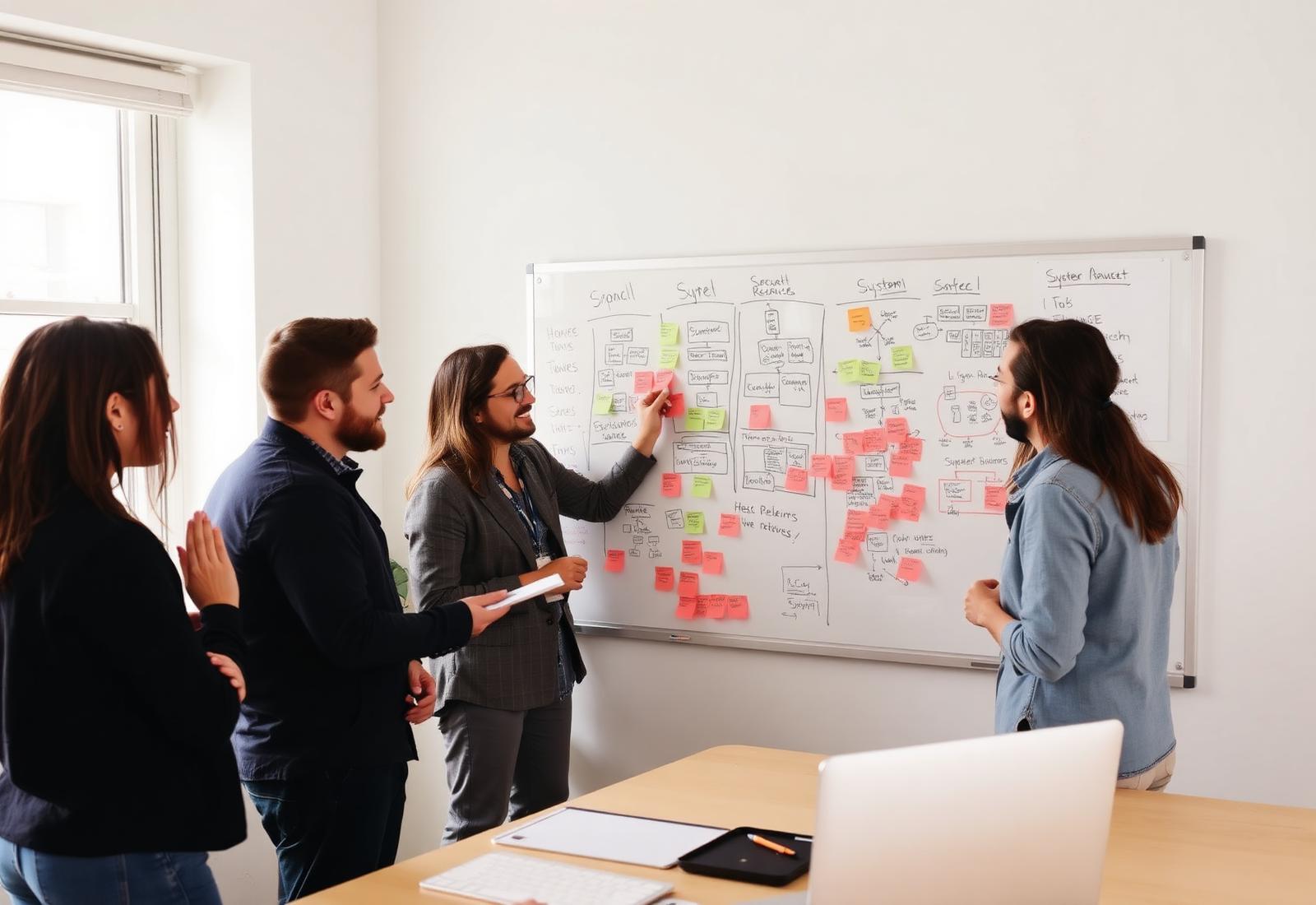
From internal tools that replace a fragile spreadsheet to full customer-facing platforms, our engineering work is guided by a simple rule: production quality from day one.
Type-safe code, automated tests, deploy pipelines, structured logging, and observability are part of the initial delivery — not a later phase that never happens.
§ 06 — Cloud & infrastructure
Environments that behave.
Infrastructure defined as code, environments that can be rebuilt from a repository, and monitoring that answers questions instead of generating noise. We work across AWS, Azure, Google Cloud, and private data centres.
For clients already in the cloud, we frequently begin with a cost and reliability audit. The output is a written plan with the specific changes that reduce spend without moving the risk elsewhere.

§ 07 — Cybersecurity
Data protection as an engineering practice.
Assessment
External and internal review of applications, cloud accounts, and identity.
Hardening
Baseline controls, secret hygiene, patch cadence, network segmentation.
Monitoring
Centralised logging, alerting on meaningful signals, documented incident response.
Governance
Policies aligned to ISO 27001, NIST CSF, and sector-specific requirements.
§ 08 — Digital transformation
Change delivered in small, provable steps.
Transformation programmes fail when everything moves at once. We sequence work so that each release stands on its own and can be paused, redirected, or rolled back without losing the whole plan.
- 01
Discovery
We map the real workflow, the actual data, and the constraints that will shape delivery.
- 02
Architecture
A written design that names trade-offs before any production code is written.
- 03
Incremental build
Short cycles, working software each iteration, changes visible to your team as they land.
- 04
Verification
Automated tests, security review, and a staged rollout with a documented rollback path.
- 05
Operate
Monitoring, on-call rotations where relevant, and clear ownership of what happens after go-live.
§ 09 — Industries
Sectors we work in.
We adapt to context; we don't pretend to be specialists in fields we haven't served.
- 01Professional services
- 02Property & real estate
- 03Financial services
- 04Logistics & supply chain
- 05Healthcare providers
- 06Public sector
- 07Manufacturing
- 08Retail & e-commerce
- 09Education
§ 10 — Quality assurance
Quality is a set of decisions taken every day, not a final review.
Written specifications
Every workstream begins with a short document naming the intended behaviour, the risks, and the acceptance criteria.
Automated verification
Unit, integration, and end-to-end tests run on every change. Coverage targets are agreed, not aspirational.
Human review
All code is reviewed by a second engineer. Security-sensitive changes get an additional review.
Observability
Structured logs, traces, and metrics from day one — so questions in production have real answers.
Environments
Development, staging, and production are isolated and reproducible from the same declarative sources.
Documentation
Runbooks and architecture notes are part of the delivery, kept next to the code they describe.
§ 11 — Reasons to work with us
What clients tend to say.
Direct communication
You speak to the people who write the code. There is no account layer between the request and the engineer.
Contracts of work
Every engagement has a written scope, an exit ramp, and a written definition of done.
Long-term thinking
We optimise for the system you will still be running in five years, not the demo you show next week.
Honest reporting
Progress reports name what did not work as clearly as what did.

§ 12 — Contact
Start with a written enquiry.
We reply to every enquiry in plain English within two working days. A short description of the problem is enough — you do not need to have a specification prepared.
- Company
- TEROS PROPERTIES LIMITED
- robynpowel67@gmail.com
- Web
- terosproperties.com